



- Pharmaceutical Products
- Products By Brand Name
- Products By Dosage Form
- Products By Generic Name
- Products By Therapeutic Class
Find a product

Find Generic
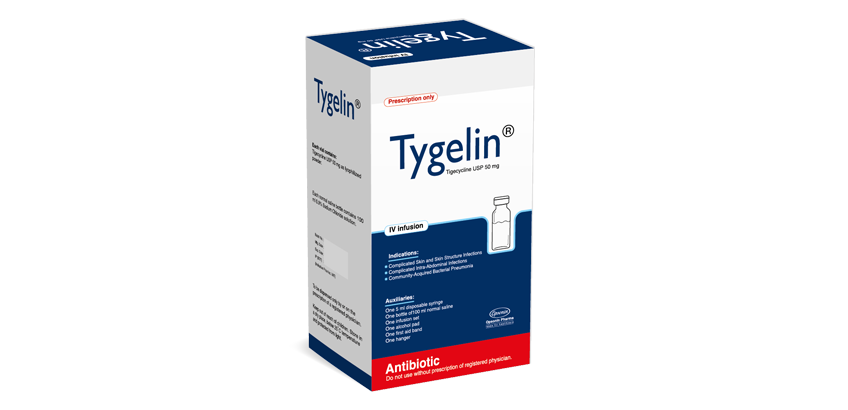
Tygelin
Tigecycline
Description:
Tigecycline is a glycylcycline antibacterial agent for intravenous infusion.
Tigecycline is a glycylcycline antibacterial agent for intravenous infusion.
Indications:
Tigecycline is indicated for the treatment of infections caused by susceptible strains of the designated microorganisms in the conditions listed below: Complicated Skin and Skin structure Infections: Complicated skin and skin structure infections caused by Escherichia coli, Enterococcus faecalis (vancomycin-susceptible isolates only), Staphylococcus aureus (methicillin-susceptible and resistant isolates), Streptococcus agalactiae, Streptococcus anginosus grp. (includes S. anginosus, S. intermedius, and S. constellatus), Streptococcus pyogenes, Enterobacter cloacae, Klebsiel-la pneumoniae and Bacteroides tragilis. Complicated Intra-Abdominal Infections: Complicated intra-abdominal infections caused by Citrobacter freundil, Enterobacter cloacae, Escherichia coli, Klebsiella oxytoca, Klebsiella pneumoniae, Enterococcus faecalis (vancomycin-susceptible isolates only), Staphylococcus aureus (methicillin-susceptible and resistant isolates), Streptococcus anginosus grp. (includes S. anginosus, S. intermedius, and S. constellatus), Bacteroides fragilis, Bacteroides theteiotaomicron, Bacteroides uniformis, Bacteroides vulgatus, Clostridium perfringens, and Peptostrep tococcus micros. Community-Acguired Bacterial Pneumonia: Community acquired bacterial pneumonia caused by Streptococcus pneumoniae (penicillin susceptible isolates), including cases with concurrent bacteremia, Haemophilus influenzae (beta-lactamase negative isolates), and Legionella pneumophila.
Tigecycline is indicated for the treatment of infections caused by susceptible strains of the designated microorganisms in the conditions listed below: Complicated Skin and Skin structure Infections: Complicated skin and skin structure infections caused by Escherichia coli, Enterococcus faecalis (vancomycin-susceptible isolates only), Staphylococcus aureus (methicillin-susceptible and resistant isolates), Streptococcus agalactiae, Streptococcus anginosus grp. (includes S. anginosus, S. intermedius, and S. constellatus), Streptococcus pyogenes, Enterobacter cloacae, Klebsiel-la pneumoniae and Bacteroides tragilis. Complicated Intra-Abdominal Infections: Complicated intra-abdominal infections caused by Citrobacter freundil, Enterobacter cloacae, Escherichia coli, Klebsiella oxytoca, Klebsiella pneumoniae, Enterococcus faecalis (vancomycin-susceptible isolates only), Staphylococcus aureus (methicillin-susceptible and resistant isolates), Streptococcus anginosus grp. (includes S. anginosus, S. intermedius, and S. constellatus), Bacteroides fragilis, Bacteroides theteiotaomicron, Bacteroides uniformis, Bacteroides vulgatus, Clostridium perfringens, and Peptostrep tococcus micros. Community-Acguired Bacterial Pneumonia: Community acquired bacterial pneumonia caused by Streptococcus pneumoniae (penicillin susceptible isolates), including cases with concurrent bacteremia, Haemophilus influenzae (beta-lactamase negative isolates), and Legionella pneumophila.
Mode of Action:
Tigecycline inhibits protein translation in bacteria by binding to the 30S ribosomal subunit and blocking entry of amino-acyl tRNA molecules into the A site of the ribosome. This prevents incorporation of amino acid residues into elongating peptide chains. To date there has been no cross-resistance observed between Tigecycline and other antibacterials. Tigecycline is not affected by the two major Tetracycline-resistance mechanisms- ribosomal protection and efflux. Additionally, Tigecycline is not affected by resistance mechanisms such as beta-lactamases (including extended spectrum beta-lactamases), target-site modifications, macrolide efflux pumps or enzyme target changes (e.g. gyrase/topoisomerases).
Tigecycline inhibits protein translation in bacteria by binding to the 30S ribosomal subunit and blocking entry of amino-acyl tRNA molecules into the A site of the ribosome. This prevents incorporation of amino acid residues into elongating peptide chains. To date there has been no cross-resistance observed between Tigecycline and other antibacterials. Tigecycline is not affected by the two major Tetracycline-resistance mechanisms- ribosomal protection and efflux. Additionally, Tigecycline is not affected by resistance mechanisms such as beta-lactamases (including extended spectrum beta-lactamases), target-site modifications, macrolide efflux pumps or enzyme target changes (e.g. gyrase/topoisomerases).
Different Dosages from Tygelin
Other Brands From Same Therapeutic Class

